TV Coverage: How Merz Canceled His Own "Fateful Evening"
For television producers, an election night is just a crime drama with different actors. They typically promise viewers a "thrilling" experience. In these times, dramatic developments are expected. But then Markus Preiß, head of the ARD capital studio, raised the stakes.
"It will be a 'fateful evening for Friedrich Merz'," he announced before the first projections. The Chancellor had "practically forced the CDU state premiers to assemble" at the Konrad-Adenauer-Haus, partly to ensure no excessive phone calls took place. He underscored the situation's extreme drama by noting the Chancellor's apparent plan to make a public statement that very evening. "A Chancellor after a state election!" A novelty!
One might assume that a CDU struggling to enter a state parliament would be novelty enough. However, the symbolic weight of a Chancellor's statement on election night, rather than the following day, seemed to carry a different significance. Viewers were poised, ready to answer years later, "Where were you when the Chancellor addressed the press on election night for a state election?" Yet, minutes later, Preiß reiterated the image of a "fateful evening for the CDU," confirmed by live footage of an empty podium at the Konrad-Adenauer-Haus, flanked by neatly folded German and European flags.
The Chancellor did appear, dominating the airwaves for four and a half minutes. Even the near-winner Manuela Schwesig, speaking simultaneously in Schwerin, was relegated to a silent, small inset. Without Preiß's framing of this as an extraordinary deviation from standard election night commentary, the anticlimax might have been less pronounced. Indeed, once Merz finished speaking, the usual channel-surfing marathon on ARD and ZDF resumed. Merz, in effect, had canceled his own "fateful evening."
Later, Preiß discussed the situation with a colleague at the CDU headquarters. He reiterated how "very unusual" it was for the Chancellor to speak. Kerstin Palzer described a "genuine murmur" among the assembled press representatives when an announcement stated, "Everything will be different" – implying only that the Chancellor would speak after the initial projection. "This has truly never happened in the history of the Federal Republic," she explained. "The unusual situation could have led to the Chancellor saying something very, very important." As a capital correspondent, one must possess considerable imagination.
Instead, Merz defended his reforms and reiterated his position as Chancellor and CDU chairman. "Therefore, it was also a minor surprise: this unusual statement right after the projection." Preiß summarized: "So, communicatively, something very special."
The normalization of the AfD extends beyond the election results themselves
This sentiment applied more directly to attempts to interview Elif Eralp, the top candidate for the Left Party in Berlin. Her party celebrated its sensational election result with corresponding exuberance and volume, forcing interviewers and Eralp to shout to be heard. It resembled an attempt to conduct coalition negotiations in a noisy nightclub. Fortunately, these election night statements rarely yield information that is not predictable or consequential the next day. The journalistic effort to coax a politician, who had just achieved a sensational result with the demand for the socialization of housing corporations, into softening this demand as negotiable predictably failed, and not solely due to the din.
The standard procedure for ARD and ZDF is to ask AfD representatives what they intend to do with their election victory, given that no one wants to form a coalition with them. The AfD politicians respond that they are willing to talk to all parties and cooperate with anyone who supports their specific policies, regardless of political differences.
However, the normalization of the far-right AfD is not solely attributable to the election results. Before the polls closed, ZDF anchor Christian Sievers presented a poll illustrating the polarization in Mecklenburg-Vorpommern. When asked whom they preferred as prime minister, the SPD candidate or the AfD candidate, voters from all parties except the AfD overwhelmingly chose the SPD candidate. Sievers interpreted this as a sign of extreme polarization, suggesting it was unusual that even 78 percent of CDU supporters favored Schwesig in this scenario – as if it were normal for conservatives to support a candidate from a party partially labeled as right-wing extremist.
In his analysis on the "heute" program, Bernd Mosebach, head of the ZDF studio in Mecklenburg-Vorpommern, stated: "Polarization has increased here. This election campaign has shown that neither side gave much away. The tone at campaign events was very irreconcilable." This framing suggests a normal political conflict between two opposing camps, rather than a distinct issue.
It is also unhelpful when journalists employ the inaccurate phrase "mandate from the voters" given to the party with the most votes. Such a "mandate" does not exist without an absolute majority. The party with the most votes does not automatically have a claim to participate in government. While parties naturally claim this, anchors on ARD and ZDF repeatedly referred to a "government mandate," as if the AfD in Mecklenburg-Vorpommern (or the Left Party in Berlin) were entitled to such a role.
What remains from this election television evening? Perhaps the moment Alice Weidel claimed the Left Party wanted to "have the rich shot," and ZDF political editor Shakuntala Banerjee helplessly retreated to the phrasing that it needed verification – as if this were a realistic possibility (all parties involved have long since apologized for a similar statement made in 2020).
Oh, and something was about Merz.
Fresh materials — General News
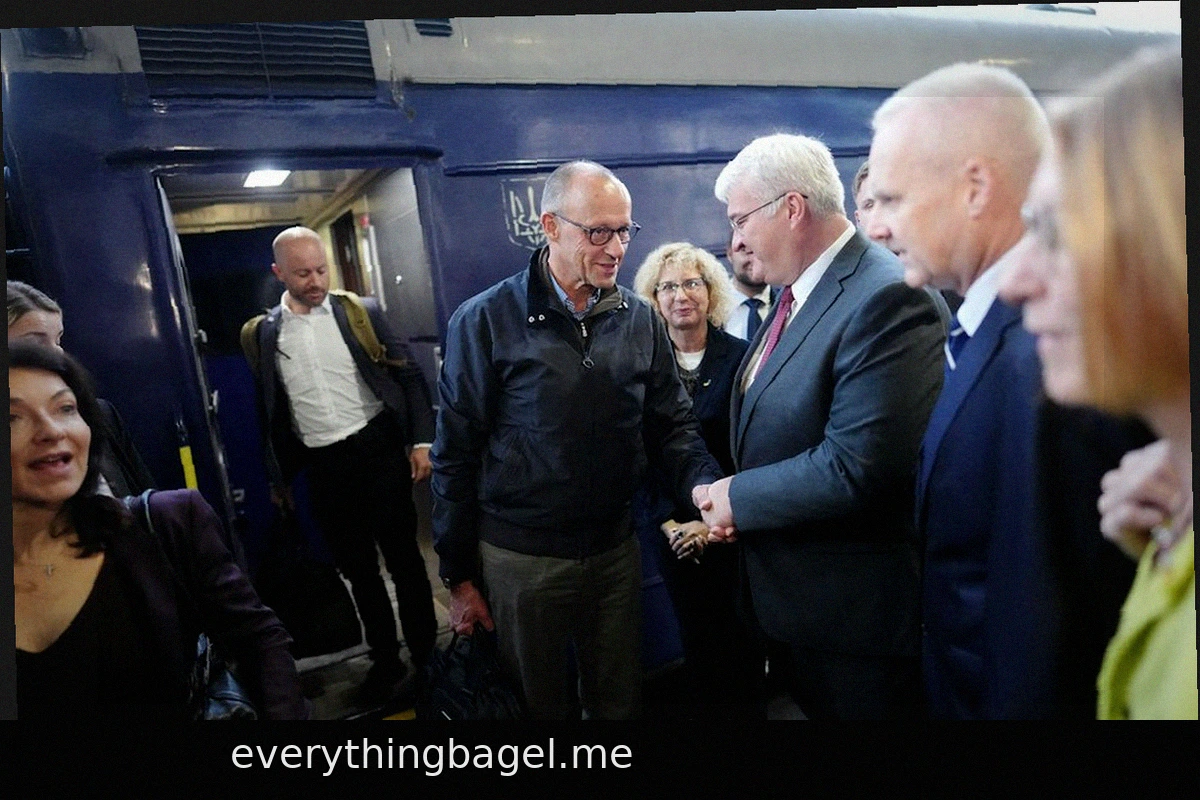
Unexpected Visit: Merz in Kyiv: "You Can Continue to Count on Our Help"
German Chancellor Friedrich Merz (CDU) arrived in Kyiv early Sunday morning for an unannounced solidarity visit. The Ukrainian capital has been suffering from intensified Russian attacks for weeks. Moscow has pledged to continue these assaults with undiminished severity and reitera
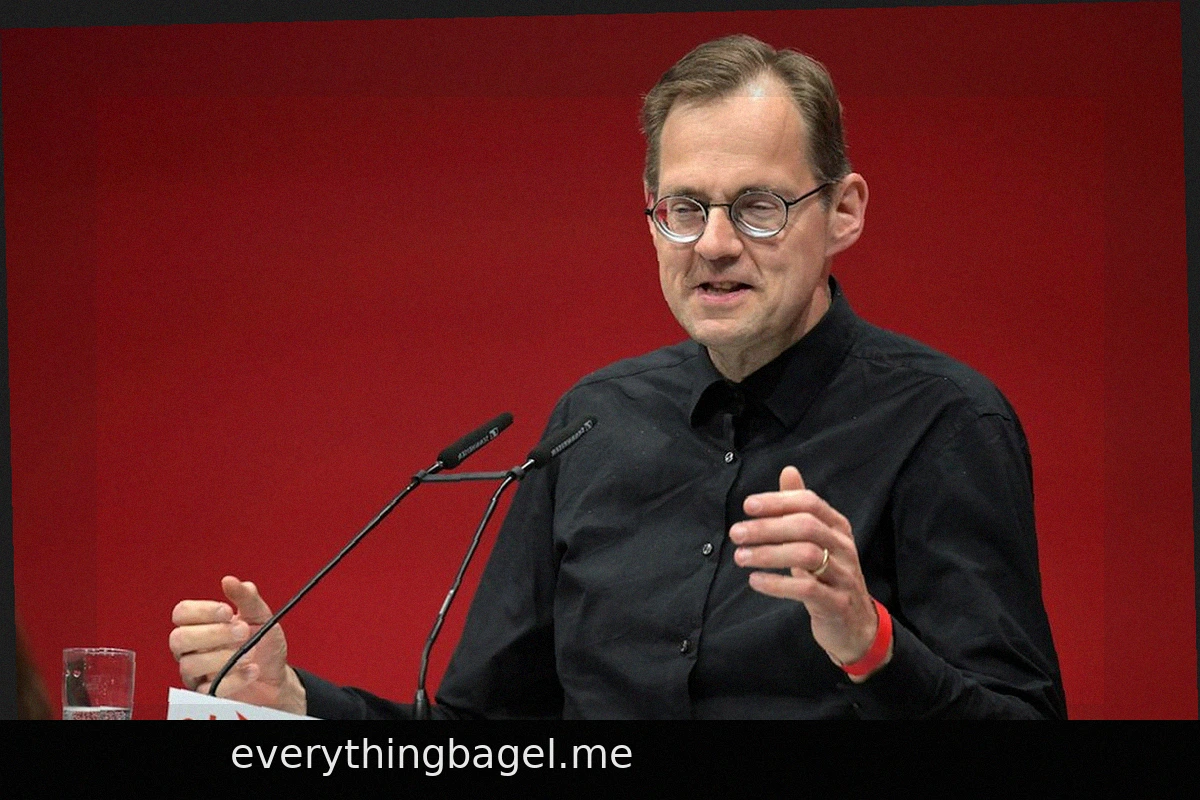
Left Party Leader Pellmann Joins "Rote Hilfe"
Sören Pellmann, leader of the Left Party's parliamentary group, has joined the human rights organization "Rote Hilfe." This move comes in the context of ongoing discussions surrounding the party's direction and its affiliations, particularly following scrutiny of former member Eli
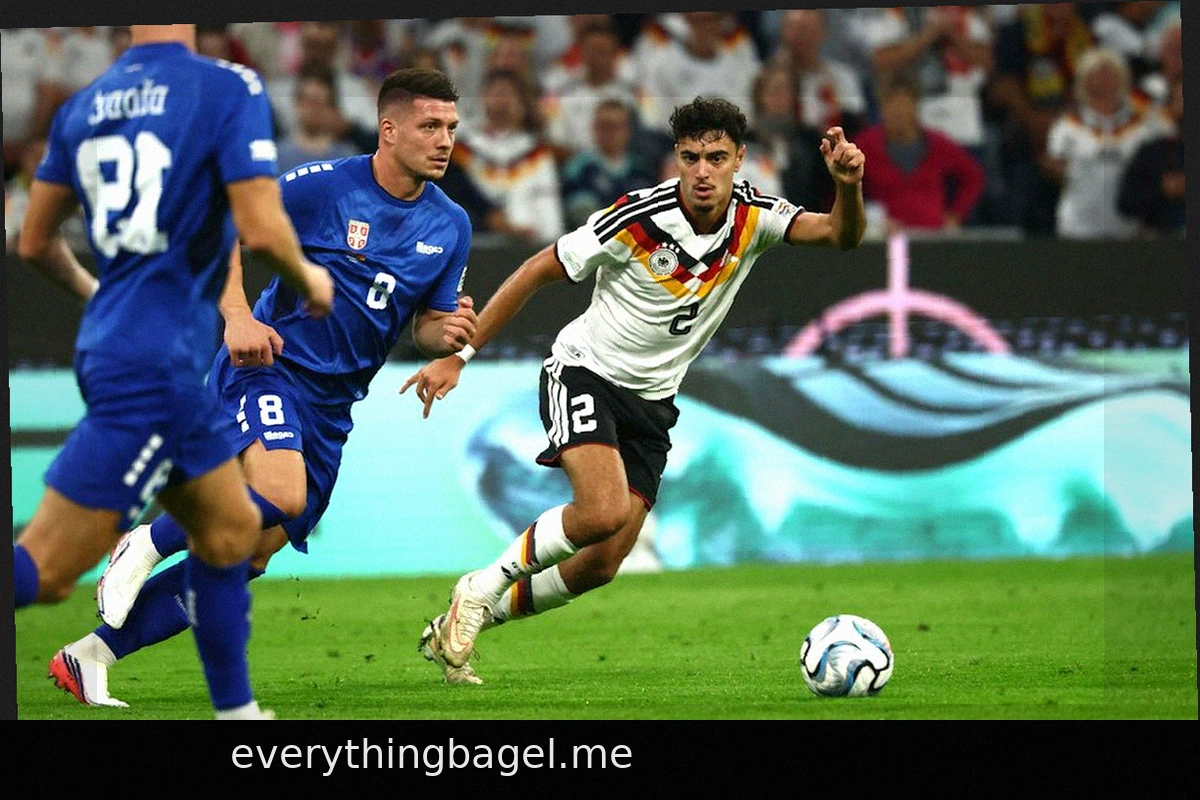
Germany vs. Serbia: Player Ratings - Pavlovic Dominates Midfield
Aleksandar Pavlovic, 22, is confidently filling his new role. Florian Wirtz demonstrated his world-class ability on two occasions. Only Nick Woltemade seemed eager to disappear. Here are the individual player ratings for the German national team against Serbia. By Martin Schneider Jo
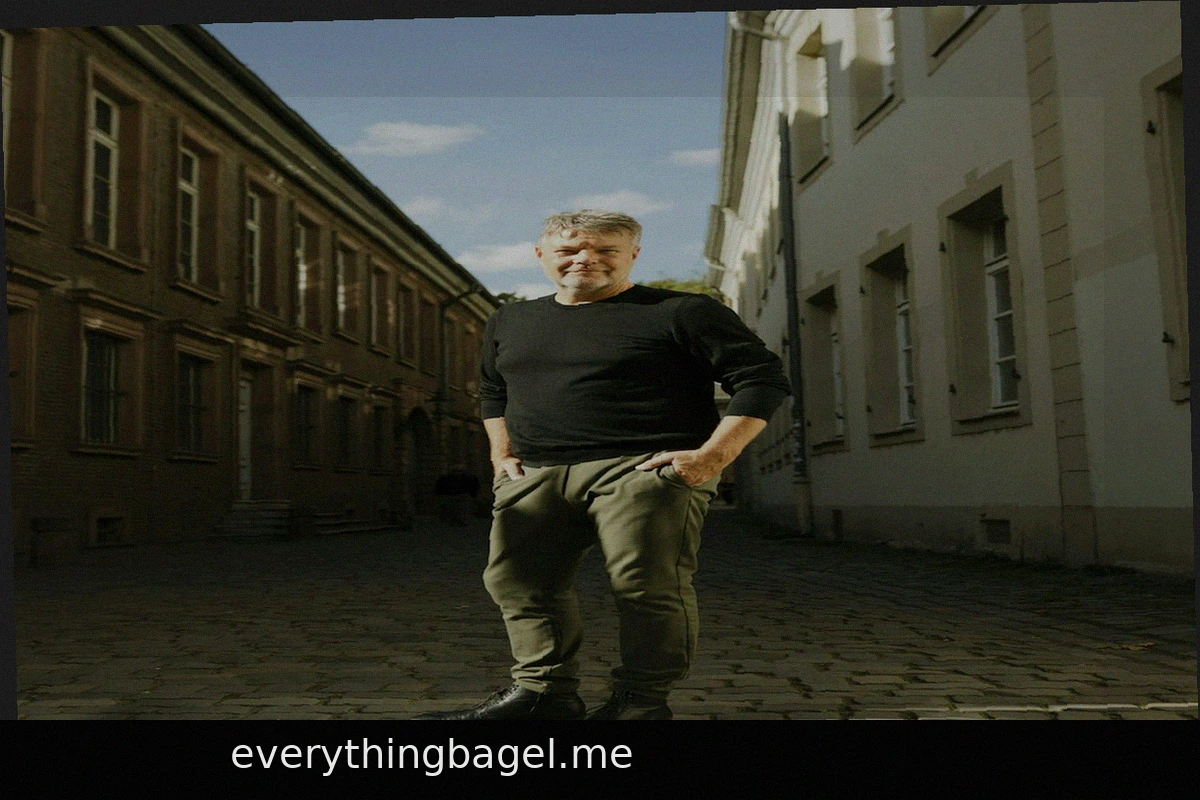
Robert Habeck on the Arctic, Lessons from Government, and His Biggest Failure
Robert Habeck appears composed. Carrying a travel bag over his shoulder, he walks along the Rhine towards the SZ's Düsseldorf office. Spotting a yellow sticker on a railing, reminiscent of the anti-nuclear movement, he notices Ludwig Erhard's image in the center with the text: “Capita
Maischberger and Antisemitism in The Left Party: "The Problem Has Been There for Years"
Political talk shows often feature the same politicians, leading to audience fatigue. Even well-reasoned arguments lose their impact through repetition. Parties opt for seasoned figures over newcomers to minimize the risk of missteps, as a single misstatement can linger and harm b

Earth's Core Rotation Influences Day Length
Scientists have long suspected that the Earth's solid inner core, a mass of iron at the planet's center, impacts our planet's rotation speed. This influence is evident in the subtle fluctuations of day length, which vary by milliseconds over several years. A recent study proposes a connec